The symbol of Egypt for millennia
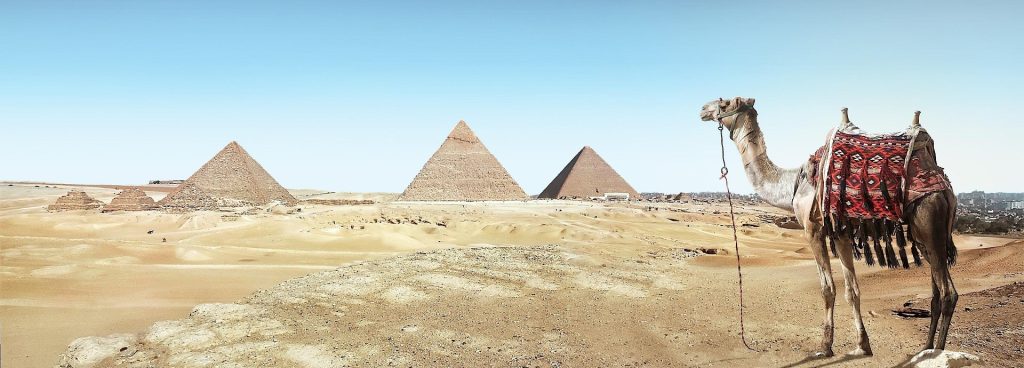
West of Cairo, where the Sahara meets the Nile Valley, lies the Giza Plateau with some of the most famous structures in human history: the Pyramids of Giza – the tallest buildings in Egypt, commissioned by the kings Khufu, Khafre, and Menkaure in the mid-3rd millennium BC. According to the ancient Egyptians, this was the entrance to the underworld, the beautiful West.
Even in ancient times, the pyramids were considered wonders of the world, and today the perfect form and the outstanding construction technology of these gigantic tombs still inspire awe and admiration.
The largest is the Great Pyramid of Giza (Pyramid of Khufu), with a base length of 227,5 meters and a height of 146,2 meters. The Pyramid of Khafre (Pyramid of Chephren) is recognizable by its well-preserved limestone casing at the top. This, along with its slightly steeper angle of inclination, gives the impression that Khafre had an even larger pyramid built than his father, Khufu. Khafre's son and heir, however, had a considerably more modest tomb built for himself: the Pyramid of Menkaure (Pyramid of Menkaure).
The narrow and cramped burial chambers of one of the three pyramids can be visited with an additional entrance ticket.