All about daily life in your holiday destination
Pharmacies
You can recognize these by the internationally used word PHARMACY. Pharmacies are widespread throughout Egypt. They generally open between 8 and 10 a.m. and stay open until 11 p.m. or even midnight. Every city has 24-hour pharmacies. All common medications can be easily purchased in Egypt. Medications that need to be taken regularly for chronic conditions should be ordered in advance. Show the pharmacist the empty package.
Doctor
Almost every hotel has a doctor who holds office hours on-site and is paid directly. Outside of these hours, you can consult them through the hotel reception. Doctors, dentists, and hospitals are available in all major cities. The staff usually speaks English, and in some cases, German. The costs incurred will generally be reimbursed by your travel health insurance upon presentation of a receipt after your return.
The most important hospitals in the Hurghada region:
Red Sea Hospital
Dahr, El Nasr Road, Hurghada
Phone: +20 (0) 65 654 48 50
Nile Hospital
Airport Road, Hurghada
Phone: +20 (0) 65 355 09 74-7
AMC, Aseel Medical Center
165 Madares St., El Hadaba, Hurghada
Phone: +20 (0) 65 344 11 10
Note: All hospitals bill most international health insurance companies directly for inpatient stays.
Banks and currency exchange
Almost every hotel complex has a bank with a counter where you can exchange cash at the official daily rate. Nearly all banks accept traveler's checks. Regardless of the payment method you use, you will always receive Egyptian pounds (LE). Banks often offer a better rate than hotel receptions. You can withdraw Egyptian pounds from all ATMs using your credit card, and in some cases, your EC/Maestro card as well.
Note: The export of Egyptian pounds is not permitted!
Buses
Here in Egypt, long-distance buses connect the most remote corners of the country with the major cities, for example, oases in the Libyan Desert with Cairo. It's best to buy tickets just one day before your trip and to definitely confirm the departure time.
Diplomatic missions
The embassies/consular representations of the Federal Republic of Germany, Austria and Switzerland are located in Cairo and Hurghada, respectively.
Telephone contacts:
German Embassy in Cairo +2 2728-2000
2 Berlin St., Zamalek, Cairo
Emergency number outside opening hours: +2 0122 2136538
Austrian Embassy in Cairo +2 35702975
5 Wissa Wassef St., Giza
Swiss Embassy in Cairo +2 25758284
10 Abdel Khalek Sarwat St., Downtown, Cairo
Filming and photography
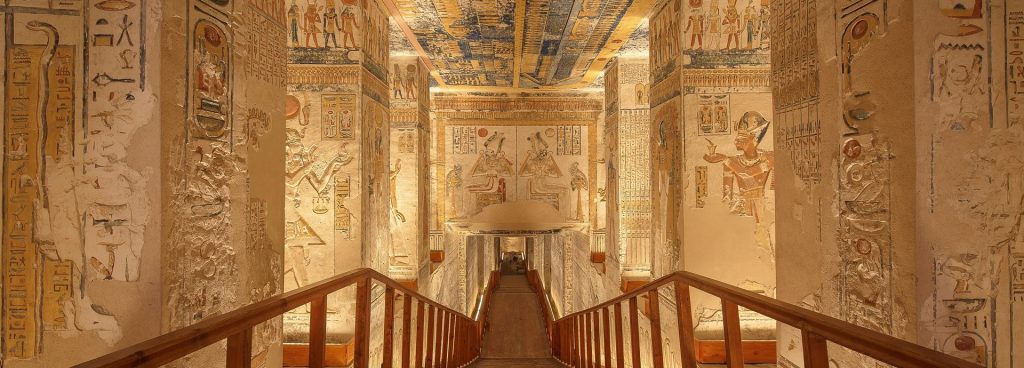
Filming and photography are generally prohibited in religious buildings. The same applies to military installations, airports, ports, and train stations. Violators face heavy fines and even imprisonment. At some tourist attractions, such as the Great Pyramid of Giza, the tombs in the Valley of the Kings, and the Egyptian Museum, you must leave your camera at the entrance or are only permitted to film/photograph for a fee. This also applies to the archaeological sites in Luxor. Filming and photography are strictly prohibited in the tombs of the Valley of the Kings. According to the Quran, photographing people and animals is not permitted, so please politely ask for permission before taking a picture. In most cases, your request will be granted. A small tip (baksheesh) is always appreciated.
Health
Here's how to protect your skin from the sun:
- Gradually acclimate your skin to the unfamiliar lighting conditions.
- Apply sufficient sunscreen with a high sun protection factor 30 minutes before sunbathing.
- Reapply sunscreen after swimming, as even waterproof sunscreen loses 50% of its protection in water.
- Avoid the sun between 11 am and 15 pm.
- Green tea reduces cell damage caused by UV radiation.
- Do not apply perfumes or deodorants before sunbathing, as this can lead to unsightly skin discoloration.
- Drink 2-3 liters of mineral water a day and avoid alcohol before sunset as well as ice-cold drinks or drinks with ice cubes.
- Zinc has anti-inflammatory properties and helps sunburns heal faster. Sources of zinc include meat, eggs, and milk.
- Some medications (e.g., antibiotics) increase photosensitivity.
Internet
Most hotels have internet access, but you'll have to pay a fee to use it. A cheaper option, at 3-5 LE per hour, is to send your emails at the internet cafes that are now practically on every street corner. In some cafes, bars, and restaurants, you can even use your own laptop to connect to the internet.
You can dial directly into the network using national access numbers. Additionally, all local mobile network operators offer mobile internet dongles for laptops or internet-enabled SIM cards for mobile phones.
Clothing
Please remember that you are spending your holiday in an Islamic country! Women should therefore avoid overly revealing necklines and very short shorts and skirts. Otherwise, you risk being subjected to unpleasant harassment, especially when visiting rural areas or taking excursions to Cairo. Topless and nudist behavior are forbidden and offend the local population's sense of honor. Men in shorts and with bare chests are also frowned upon and will make themselves the laughingstock of the locals. Appropriate attire should be worn for dinner. Therefore, please pay attention to the notices in the hotels regarding dress codes. Summer clothing will serve you well throughout the year. For the cooler nights on the Red Sea, a light sweater is recommended, and for visiting the pyramids, temples, and tombs, sturdy, comfortable walking shoes are advisable.
Climate
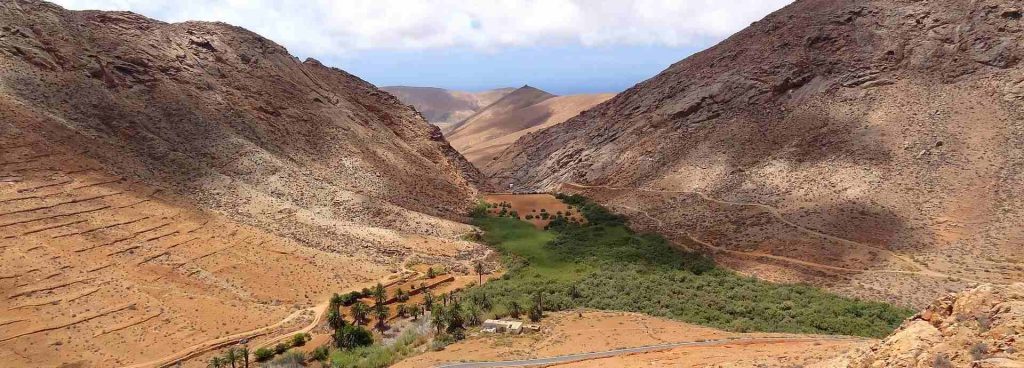
The coastal region and Lower Egypt have a Mediterranean climate, meaning mild, wet winters and hot, dry summers. July and August are dry. Upper Egypt has a desert climate with very hot summers, prolonged drought, and high levels of sunshine year-round. In Luxor, the thermometer can reach up to 49°C. Strong temperature fluctuations between day and night are typical in winter. For example, in Luxor, the daily minimum in February is around 10°C, while the daily maximum can reach 25°C. Temperatures are even more extreme in the desert regions, where they can drop from 50°C to as low as -5°C. Beach holidays on the Red Sea coast and in the Sinai Peninsula are possible all year round. Water temperatures are generally always above 18°C – even between December and February! Air temperatures rise to 27°C and cool down to 15°C or less at night.
live
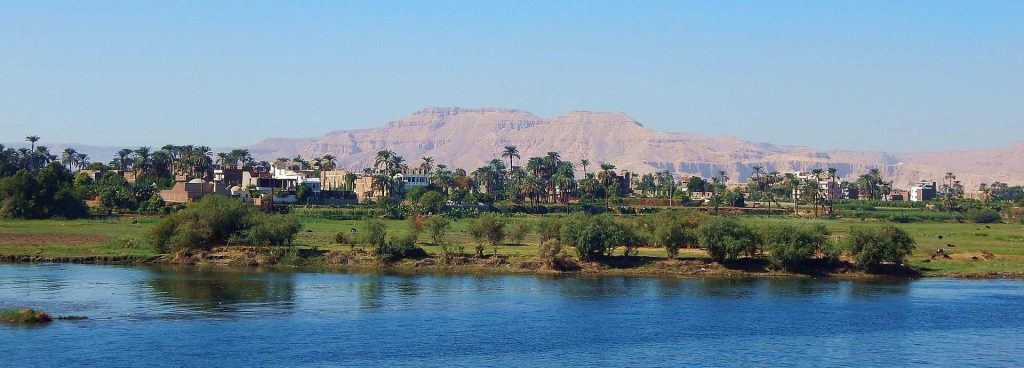
Egypt's tree of life, the date palm, is ubiquitous. A single palm yields an average of 60 to 100 kg of the sweet fruit per year, and its dry fronds provide building material for simple furniture, fruit crates, fences, and enclosures. Since pastureland is scarce, livestock farming plays a relatively minor role, and Egyptian meat is primarily chicken. However, farm animals are still very much a part of agriculture, as tractors have yet to displace traditional pack animals like camels, donkeys, and water buffaloes in the Nile Valley. Agriculture cannot keep pace with the enormous population growth. Despite very fertile soils and excellent growing conditions, the dream of self-sufficiency has long since been shattered. Large-scale land reclamation projects will not change this in the long run. Since the mid-1970s, Egypt has been importing more food than it exports. Today, 36% of its food is imported. A drive through the Nile Valley will show you lush, green fields at any time of year, cultivated according to cooperatively established farming plans.
tap water
The tap water is not potable, but it is perfectly safe for brushing your teeth and personal hygiene. You are in the desert, where water is a precious commodity. Please help us conserve water. Occasionally, when hotels are fully booked, there may be temporary shortages or water outages, for which we ask for your understanding.
Note: Here, mineral water refers to still water. Carbonated water is called soda or sparkling water.
Post
Postcards and stamps are available in almost all souvenir shops. Affix 3,5 LE to your postcard. You can drop off your mail at reception in all hotels. Delivery to Germany takes approximately 2-3 weeks. Post offices are generally open from Saturday to Thursday, 9 am to 14 pm. Please expect longer waiting times, as they are usually very busy.
Souvenirs
- Gold and silver jewelry of all kinds
- Copper and brassware as well as fine woodwork with mother-of-pearl inlays
- Woven carpets, pictorial tapestries, camel and buffalo leather goods
- Oriental spices and tea, such as the famous karkadê (mallow flower tea)
- Fragrant oils and essences
- Various items with motifs of the ancient Egyptians (on mugs, T-shirts, towels, hats, etc.)
- Papyrus exhibition rooms can be found all over Hurghada.
- Water pipes (shishas)
Under no circumstances should you buy coral, ivory, turtle shells, or seashells, as these are protected under the Convention on International Trade in Endangered Species of Wild Fauna and Flora (CITES) and may not be exported! Antiques older than 100 years are also prohibited from leaving the country!
Sports
Golf
9- or 18-hole golf courses are available in all holiday areas. The most famous of these is located in Soma Bay at the Hotel La Résidence des Cascades. Other golf courses can be found at Madinat Makadi in Makadi Bay, at the Steigenberger Golf Resort in El Gouna, and at the Steigenberger Al Dau Beach Hotel in Hurghada.
Tennis/Squash
Offered by most hotels. Equipment can be rented on site.
Watersports
The Red Sea resorts are a paradise for divers, snorkelers, surfers, and kitesurfers, with a large number of diving and surfing schools. We recommend that beginners and advanced participants entrust themselves only to a reputable diving or surfing school, such as Aquarius Diving (Mariott Hotel Hurghada, Royal Azur Hotel) or Tommy Friedl's Surf & Kite School (Jasmin Village Hotel). Your tour guide will be happy to provide you with further information.
Beach
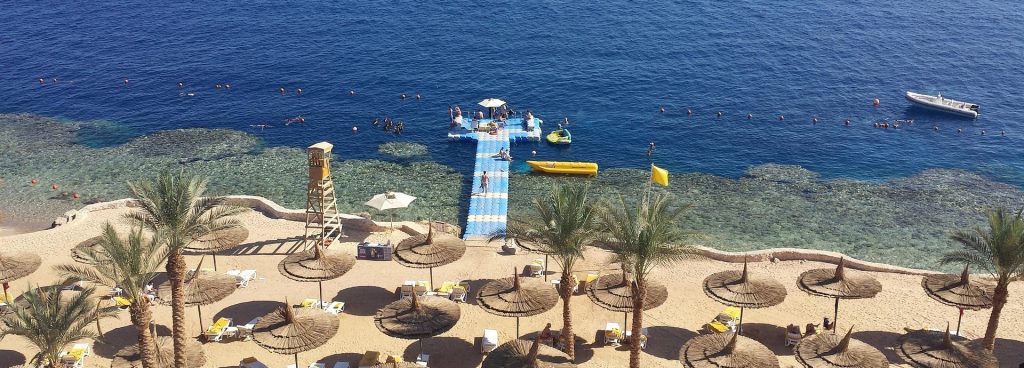
The hotels located directly on the beachfront all have their own private beaches, where sun loungers, parasols, and towels are provided free of charge. These are preferable to public beaches due to the fees charged and, above all, because of their often very basic and sometimes poor facilities. Please remember that you are vacationing in an Islamic country, and both topless sunbathing and nudism are prohibited. Always use adequate sun protection and avoid direct sunlight, especially at midday! Due to the numerous reefs and coral reefs, often located very close to the shore, wearing water shoes is recommended. Remember: The coral and shells you find while swimming, bathing, and snorkeling in the sea do not belong in your luggage!
Also pay attention to the flags, which signal the following to you:
Green: Bathing and swimming possible
Yellow: Swimming out is prohibited
Red: Swimming and bathing are prohibited
White and black checkered: The beach is unsupervised.
road traffic
It is not recommended to rent a car in Egypt: unfortunately, there is no liability insurance, and the prevailing traffic conditions can be very dangerous. Using public transport is much easier, more environmentally friendly, and also cheaper. A cheap and very popular mode of transport in Egypt is the minibus. Minibuses do not run according to a fixed timetable but are hailed by hand signals at the roadside.
In principle, the same traffic rules apply in Egypt as in Europe. Driving is on the right in Egypt.
Electricity
The electrical voltage in hotels is 220 volts. An adapter is not required if your device has a European plug.
Taxi
There are no official prices. Some hotels offer a limousine service (with a driver). These usually have fixed prices. However, you can always negotiate (at reception/guest services). Otherwise, you should always negotiate the price of private taxi rides. Never get in without an agreed-upon price, as this will save you a lot of trouble! The many minibuses that operate as shuttles are extremely inexpensive. The fare is between 1 and 3 LE per person. There are now also official taxis in Hurghada. They are easy to recognize because they are all orange and blue. They also have meters. Whether these actually work is another question! To be on the safe side, ask about the fares beforehand. This will save you from unpleasant surprises.
Phone
Phone calls from your room are more expensive. One minute to Europe costs approximately 12 LE. Often, a 3-minute call is the minimum charge, meaning this amount (approximately 30-38 LE) will be charged in any case. Calls from a mobile phone often cost the same or even less. The most common networks are:
Mobinil or Vodafone EG. Prepaid mobile phone SIM cards can be purchased cheaply from various Egyptian mobile phone companies upon presentation of a passport. Top-up cards for these SIM cards are available in almost every small supermarket.
Area codes of the countries:
Germany +49
Austria +43
Switzerland +41
Netherlands +31
Luxembourg +352
Tip
Baksheesh – a word that quickly becomes familiar to every traveler in an Arab country. Giving baksheesh is deeply rooted in the culture, not a tourist invention. At first, it often seems like a nuisance, but upon closer inspection, it becomes clear that a large part of the population earns its daily bread this way. A tip is expected for every small service (drivers, local guides and escorts on excursions, camel drivers, guards at mosques and tombs, etc.). At hotels, you should tip the housekeeping staff (around 10 LE per week), the porter (around 2 LE), and the service staff. In restaurants and bars, the guideline is about 10% of the bill. Good service should be rewarded. Even if you have booked full board or all-inclusive, the waiter expects a small tip. You'll see, it works wonders!
time
As a rule, you should set your clocks forward by one hour upon arrival in Egypt. Summer and winter time differ from the times in Europe.
Environment
Help your holiday destination and make your contribution!
Save water: Fresh water is a precious resource, and even more so here in the desert. Use it sparingly!
Save energy: Turn off the lights and air conditioning when you leave your room!
Landscape protection: Don't throw away waste carelessly. Dispose of it properly!
Conservation: Do not buy items that are subject to species protection laws or that promote the extinction of protected and rare animal species! Look, yes – touch, no: Do not touch corals, shells, or other marine organisms; leave them in their natural habitat!
Respect for people and their culture: Respectable clothing, tradition and culture!
Valuables
Please store valuables, your passport, and travel documents in the hotel safe. The hotel accepts no liability for stolen items or money not stored in the safe.