World's largest open-air museum
Nowhere else in Egypt are the remnants of a glorious past so concentrated as here in Luxor. Luxor's history began 2.000 BC as a small village called Wasset. Magnificent temples and immaculate works of art still testify to the grandeur and power of ancient Thebes, the splendid capital of a bygone empire – a cultural and economic center in one.
After crossing the Nile from east to west, you will find yourself in Thebes West. Queen Hatshepsut had her terraced temple built here – a masterpiece of its time. The magnificent mortuary temple of Ramses III, Medina Habu, is one of the most underrated archaeological sites.
The remains of the mortuary temple of Amenhotep III are the legendary Colossi of Memnon. The temple behind them was destroyed in an earthquake during Roman times. Sixty-four tombs with corridors, passageways, and treasuries are hewn into the mountain massif 480 meters above sea level in the Valley of the Kings.
Remarkable are the natural colors, still visible 3.000 years ago, of the various wall paintings and reliefs, which you can admire yourself.
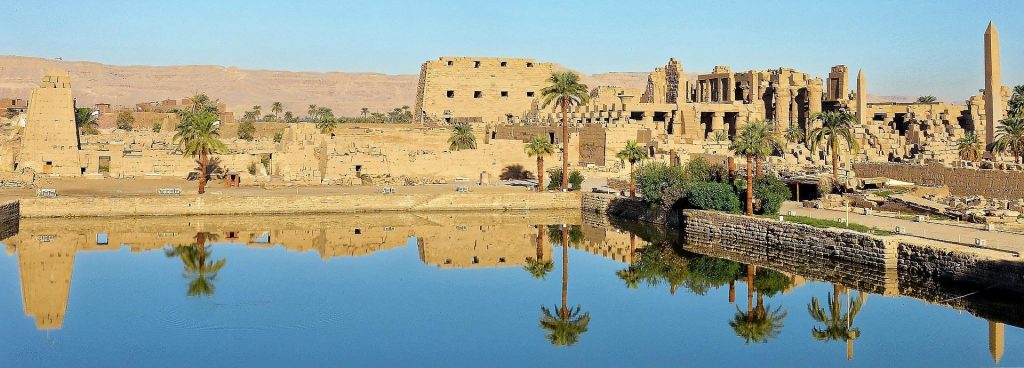
The Karnak Temple is by far the largest temple complex in Egypt and the most important place of worship from the Pharaonic period. Its construction spanned over 2.000 years. The ram-headed statues, also known as the Avenue of Sphinxes, stand guard. After the first pylon, you will find the hypostyle hall in the vestibule.
with its 134 relief-decorated columns. Passing standing obelisks, you reach the sanctuary. Next to it is the sacred lake, which served for the ritual washing of the priests and temple vessels.
The Luxor Temple is the festive house of the god Amun-Re, which displays many vivid scenes of the divine celebrations from the time of the pharaohs.