"Those who do not find good in their own religion, …"
… will not be found in other religions either.”
Arabic proverb
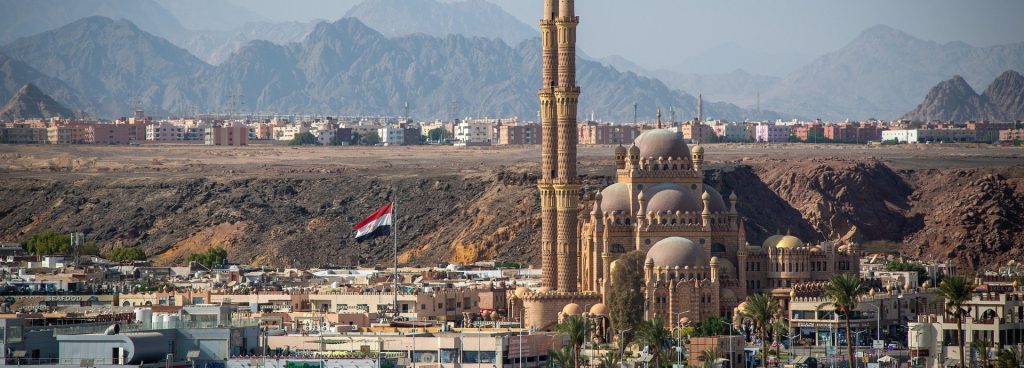
The predominant religion in Egypt is Islam, with approximately 72 million adherents. The Egyptian constitution guarantees freedom of belief and religion, but simultaneously declares Islam the official national religion. Most Egyptians are Muslim. The largest religious minority besides Islam is the Copts, comprising about 10% of the population. The term Copt is derived from the Greek word for Egyptians – aigyptos – and still refers to the Christian community in the land of the Nile.
In the 2nd century AD, many Egyptians converted to Christianity, but just two centuries later, a break with the Orthodox Church occurred. This schism was triggered by both the dispute over the universally valid definition of the person of Jesus and the question of who should hold sway over Christianity in the East. The perceived external influence of the theological centers of Rome and Byzantium was also violently resisted.
Following the Arab-Islamic conquest of Egypt from the 7th century onward, the number of Copts steadily declined, and since the beginning of the 16th century they have been a minority. An indelible symbol of the Coptic faith is a tattooed cross on the right wrist. Egypt is one of the few countries in the world where the religious affiliation of every citizen is recorded on their identity card.
Religion continues to play a significant role in the daily lives of Copts. Marriages between members of different religions, and even between members of other Christian denominations, are extremely rare. Copts strive for discretion in public. Nevertheless, they enjoy a good reputation as experts in finance and waste management in the capital, Cairo.
Less well-known than Islamic Cairo around Khan el Khalili, but just as worth seeing, is the Coptic quarter of Misr El-Qadima with its numerous Coptic churches dating from the 3rd to 5th centuries. Perhaps the most famous of these churches is the Church of El-Moallaka or St. Mary, also known as "the Floating One".